


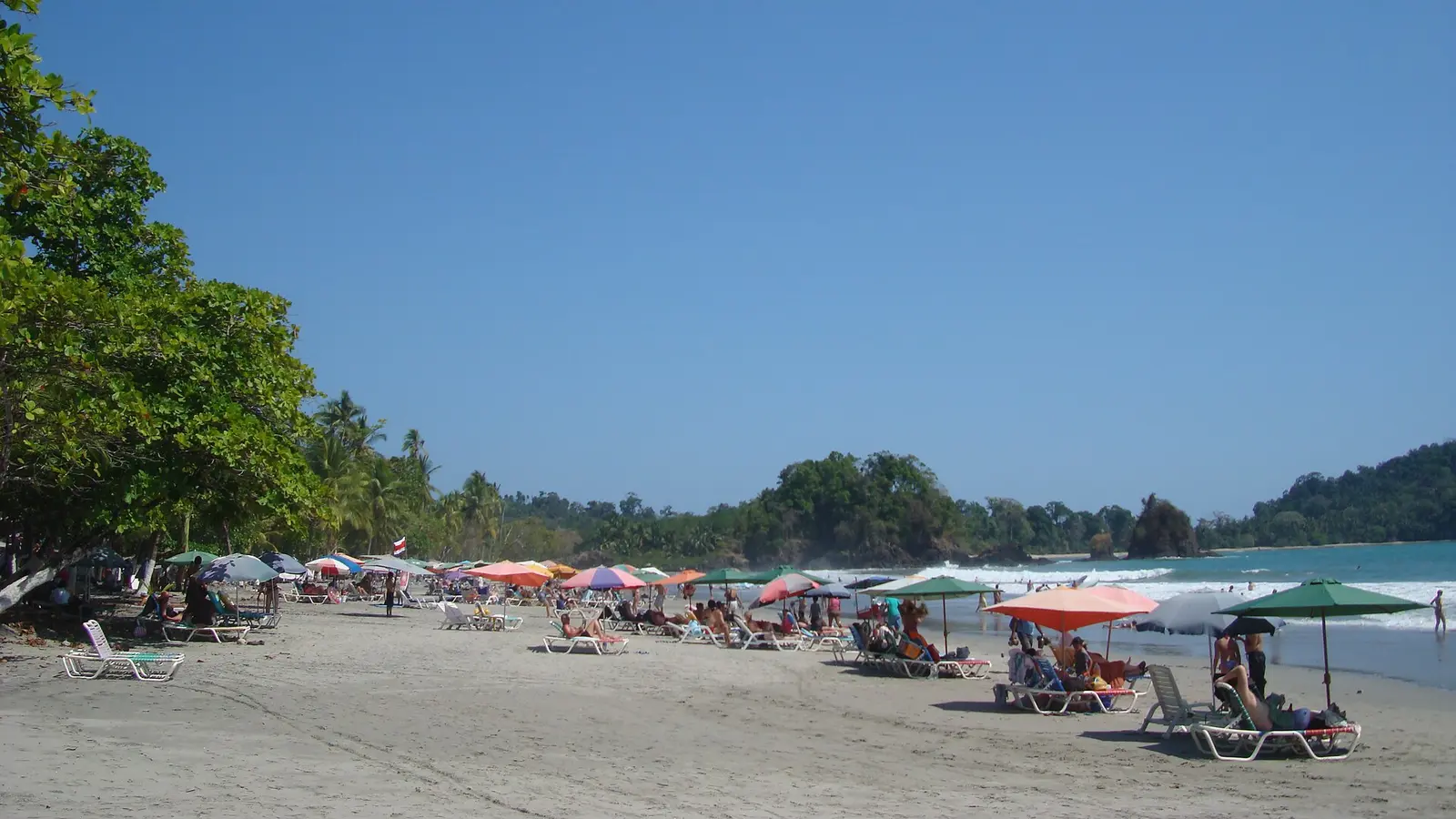
Two coasts, two calendars
Costa Rica is roughly the size of West Virginia, but it runs two separate weather systems, and that single fact decides most of your trip. The Pacific side, Guanacaste, the Nicoya Peninsula, Manuel Antonio, has a hard split between a dry season and a wet one. The Caribbean side, Puerto Viejo, Cahuita, Tortuguero, never fully dries out and follows its own rhythm. The two coasts can sit in opposite weather on the same afternoon.
This matters because the country's peak advice, come in the dry months, only describes the Pacific. According to Visit Costa Rica, the Caribbean coast has two of its driest, sunniest stretches in roughly February to March and again in September to October, and that second window falls during the wettest weeks on the Pacific. When the west coast is under afternoon downpours in October, Puerto Viejo is often having its best beach weather of the year.
So the first planning question is not when, it is where. Pick the coast, then pick the month to match it. Line the two up wrong and you can spend a week watching rain on a beach that was supposed to be dry. For how this kind of coast-by-coast timing compares with the rest of the map, our best-time-to-visit rundown sets Costa Rica beside dozens of other destinations.
For the classic sun-and-surf Pacific trip, come December to April. For the Caribbean coast, target February to March or September to October, when it dries out. Don't book both coasts expecting the same weather in the same week, they rarely cooperate.
Dry versus green
Ticos call them the two seasons: verano, the dry summer, and invierno, the green winter. On the Pacific, the dry season runs roughly December to April, blue skies, Papagayo winds, and daytime highs often around 85 to 95°F (29 to 35°C) on the coast, per Visit Costa Rica. Rain in January through March is close to nonexistent on that side. This is peak, and lodging and rental rates sit at their highest, expect to pay somewhere around 30 to 50% more than in the low months.
The green season, roughly May to November, is not the washout people fear. Mornings are usually clear and bright; the rain tends to arrive as a heavy afternoon burst and then clears. There is even a drier pocket inside it, the veranillo or little summer, around July and August, when the Pacific eases off for a few weeks. The landscape is at its most vivid, the rivers are full, and rates fall hard.
- Green-season lodging and car rental run well below dry-season peak, often 30% cheaper or more
- Mornings are typically clear; rain clusters in the afternoon and passes
- Landscapes are lush, waterfalls are full, and crowds thin out at the parks
- The July–August veranillo gives a drier window inside the wet months
- September and October are the wettest on the Pacific, with roads that flood and wash out
- Some remote lodges and boat routes cut back hours or close in the peak-rain weeks
- Afternoon storms can shorten hikes and cancel water activities on short notice
There is a version of the green season that most people talk themselves out of, and it can be the better trip. You trade a guarantee of dry afternoons for emptier trails, cheaper rooms, and forest that hums after the rain. If you can stay loose with your plans and start each day early, the wet months reward you more than the brochure suggests, though September and October are the two weeks I would still hesitate over on the Pacific.
Where the wildlife actually is
About a quarter of Costa Rica sits under some form of protection, and the wildlife is concentrated in a handful of parks and reserves rather than spread evenly. You will not find sloths and scarlet macaws from your rental-car window; you find them by going where they live, and most of those places charge a fee and, increasingly, want you booked online first. The national parks run through SINAC, and several now require advance reservation through the official portal.
| Park or reserve | Adult entry (2026) | Booking | Best for |
|---|---|---|---|
| Manuel Antonio | ~$18 | Online in advance (SINAC) | Sloths, monkeys, beach-and-forest combo, easy access |
| Corcovado | ~$15/day | Registered guide required | Remote rainforest, tapirs, wildest biodiversity |
| Arenal Volcano | ~$15 | At gate or online | Volcano trails, lava fields, hot springs nearby |
| Monteverde Cloud Forest | Privately run reserve | Book direct | Cloud forest, hanging bridges, quetzals |
| Tortuguero | Park fee plus boat | Guide and boat access | Canals, nesting turtles, Caribbean-side jungle |
A few practical calls. Manuel Antonio is the easy win, wildlife-dense, close to the coast, and reachable without a rough drive, which is exactly why it caps daily entry and sells out; book ahead. Corcovado is the opposite, the country's wildest park, guide-only, and worth the logistics if a serious rainforest day is the reason you came. Monteverde sits high in the cloud forest and runs cooler and wetter than the lowlands, its main reserve is privately operated by the Tropical Science Center, so it books separately from the SINAC parks.
You don't stumble onto the wildlife here. You pick the right park, book it in advance, and turn up at opening.
Timing inside the day beats timing inside the year for animal sightings. Gates open early for a reason: the forest is most active in the first hours and again near dusk, when the heat drops and the canopy fills with sound. Turn up at opening with a guide who knows which tree the sloth favors, and you will see more in one slow morning than in a whole restless afternoon of looking on your own.
What it really costs
Here is the part people underprice: Costa Rica is not cheap. Within Central America it sits near the top of the range, its travel costs land in the region's most expensive tier, well above Nicaragua, Guatemala, or Honduras. Better infrastructure, strong environmental protections, and a mature tourism industry all get baked into the bill. Come expecting Guatemala prices and the first grocery run will set you straight.
| Style | Daily budget (per person) | What it covers |
|---|---|---|
| Backpacker | ~$45–70 | Hostel dorms, public buses, sodas, the odd park day |
| Mid-range | ~$90–160 | Private rooms and lodges, a rental car, guided tours, restaurants |
| Comfort / high-end | ~$250+ | Boutique eco-lodges, private guides, domestic flights, spa and resort extras |
The biggest lever is how you eat and move. Family-run sodas serve a casado plate for a fraction of what a tourist-facing restaurant charges, and paying in colones rather than dollars usually gets you a better rate at small shops. Public buses are slow but cheap; the moment you add a rental car, tours, and sit-down dinners, a couple can watch a day cross $200 without trying. For a line-by-line way to size your own trip, our trip-budget guide breaks the numbers into tiers you can copy.
One more comparison worth running before you commit. Costa Rica and its northern neighbor pull the same crowd for different reasons, and the price gap between them is real; our Mexico vs Costa Rica breakdown lays out where each one wins on cost, wildlife, and ease. If the daily number here gives you pause, that is the next page to read.
Costa Rica runs pricier than the rest of Central America, plan for it. A realistic mid-range day is around $90 to $160 per person before international flights. Eat at sodas, pay in colones, and lean on buses where you can; the rental car and guided tours are what push the number up fastest.
Renting a car and taking the roads
Costa Rica is one of the countries where a rental car earns its keep. Public buses reach the main hubs cheaply but slowly, and the best beaches and lodges sit down roads no bus runs. The catch is the sticker shock: the headline rental rate is never the real rate, because Costa Rica adds a piece of insurance you cannot decline.
Whatever you drive, this is a country where travel insurance earns its place, both the rental cover and a personal policy for the zip-lines, surf lessons, and remote hikes that fill a Costa Rica itinerary. Read the activity exclusions before you buy, adventure sports are the clause people miss, and a cracked windshield on a gravel road is the kind of small disaster that is cheaper to have covered than to argue about at the counter.
Entry, in plain terms
For most RealRoute readers, getting in is simple. Citizens of the US, UK, Canada, Australia, and New Zealand enter visa-free for tourism, with US and UK visitors stamped in for up to 90 days and Canadians often granted up to 180 at the officer's discretion. A 2025 change raised the maximum allowed stay for these visitors, but the number written in your passport is still the officer's call, so treat 90 days as the working assumption.
- Proof of onward travel: you must show you will leave before your stamp expires, a return or onward flight, a bus ticket to Panama or Nicaragua, or a cruise booking. Airlines sometimes ask at check-in, not just immigration.
- Funds: the rule on paper asks for around US$100 per month of stay. It is rarely checked, but it is still the law.
- Passport: requirements have loosened, but do not travel on a passport near its expiry; carry one with comfortable validity to avoid airline hassle.
- Departure tax: roughly $29 to leave, now bundled into most airline tickets. Confirm it is included so you are not paying twice at the airport.
Immigration terms move around and the officer at the desk has the final word, so read your own nationality's current allowance and the onward-travel rule on Costa Rica's official tourism site while you plan, not while you queue. For how Costa Rica stacks up against the wider set of trips you might be weighing, our best-places-to-travel guide puts it in context.
Frequently asked questions
It depends on the coast. For the Pacific side, the classic beach-and-surf trip, come in the dry season, roughly December to April, for blue skies and almost no rain. For the Caribbean side, aim for its drier windows of February to March or September to October, the second of which is the wettest stretch on the Pacific. The green season (May to November) brings lush landscapes, thinner crowds, and rates around 30% lower, with rain that mostly falls in short afternoon bursts. September and October are the wettest weeks on the Pacific and the two most worth hesitating over there.
Yes, by Central American standards. Costa Rica sits in the region's most expensive tier, well above Nicaragua, Guatemala, or Honduras, thanks to stronger infrastructure, environmental protections, and a mature tourism industry. Budget travelers using hostels, public buses, and sodas can manage around $45 to $70 a day; a mid-range trip with a rental car and guided tours runs closer to $90 to $160 a day per person, and high-end eco-lodges push past $250. Eating at family-run sodas and paying in colones are the two easiest ways to bring the number down.
Not always, but often. Paved routes and the main beach towns in Guanacaste are fine in a standard car. A 4x4 with good ground clearance pays off for Monteverde's gravel approaches, remote Nicoya beaches, river crossings, and green-season backroads that turn to mud. Expect roughly $50 to $150 a day for a 4x4, and remember that every rental carries a mandatory third-party liability insurance you cannot waive, usually adding $10 to $20 a day, so always price the all-in total rather than the online teaser.
For the popular ones, yes. Several SINAC parks, including Manuel Antonio, cap daily visitors and require you to reserve and pay online before arrival through the official system. Corcovado can only be entered with a registered guide, normally arranged through an agency in advance. Private reserves like Monteverde book separately from the government parks. Entry for international adults runs about $15 to $18 at the main SINAC parks in 2026, with children usually around $5. Check current fees and reservation rules on SINAC's official portal, since they change.
No. Citizens of the US, UK, Canada, Australia, and New Zealand enter visa-free for tourism, with US and UK visitors typically stamped in for up to 90 days and Canadians sometimes granted up to 180 at the officer's discretion. You must show proof of onward travel (a return or onward ticket) and, on paper, funds of around US$100 per month of stay. A departure tax of roughly $29 applies but is now bundled into most airline tickets. Rules shift, so confirm your nationality's current terms on Costa Rica's official tourism site before you fly.
Costa Rica rewards travelers who plan around its quirks: pick the coast first, match the month to it, book the headline parks ahead, and budget honestly, this is the pricey end of Central America. Get a 4x4 if your route needs one, cover yourself for the adventure activities, and the country delivers more wildlife per day than almost anywhere you can drive yourself.