


Five regions, five different trips
Two thousand miles separate the desert beaches of Baja from the Maya ruins of the Yucatán. People who say Mexico is unsafe, or cheap, or crowded, are usually talking about one corner of it and pinning the label on the whole. Break it into regions and the trip planning gets far simpler, because each one runs on its own season, its own budget, and its own safety picture. RealRoute plans every Mexico trip this way, by region rather than by one blanket verdict, because the country refuses to average out.
The Yucatán and the Caribbean coast
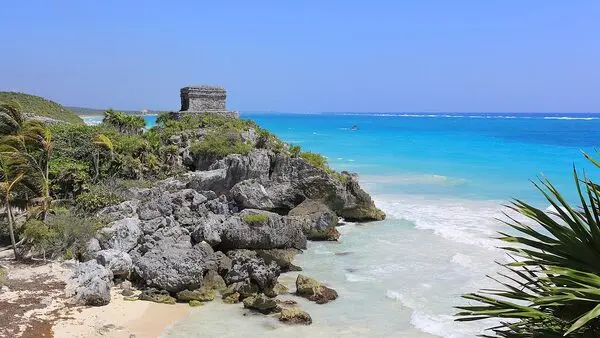
The eastern peninsula, Quintana Roo and Yucatán state, is where most first-timers land. Cancún, Playa del Carmen, and Tulum sit on turquoise Caribbean water; inland you get Mérida, Valladolid, cenotes, and Chichén Itzá. It's the most touristed and the most expensive stretch of the country, but also the easiest to travel, with English widely spoken and a flat, safe grid of highways. Yucatán state itself carries the lowest official advisory in the country.
Mexico City and the colonial highlands
Mexico City is one of the great capitals of the Americas, and the surrounding highlands, Oaxaca, San Miguel de Allende, Guanajuato, Puebla, hold the country's best food and its most walkable historic centres. This is the culture-and-cities half of a Mexico trip, cooler in altitude, cheaper than the coast, and endlessly deep. Budget a week and you'll wish you had two.
The Pacific coast and Baja
Down the western shore run Puerto Vallarta, Sayulita, Oaxaca's surf towns, and the wilder beaches most package tourists never see. Baja California, the long finger of desert and sea north of the mainland, adds Los Cabos, whale-watching, and La Paz. The Pacific is for surf, road trips, and stepping outside the resort bubble; its best window runs October to April.
First trip and short on time? Base yourself in the Yucatán and add a few days in Mexico City. Chasing food, history, and lower prices, skip the coast and work the colonial highlands. After surf, road trips, and fewer crowds, aim for the Pacific or Baja. If you're weighing the country against its neighbour, our Mexico vs Costa Rica breakdown splits them on cost, wildlife, and vibe.
Is Mexico safe? Reading the advisories
This is the question that stops people booking, so it's worth answering with the actual documents rather than headlines. Mexico is the one country in the world where the U.S. State Department assigns a separate advisory level to every single state, which is the clearest sign that a blanket verdict is useless. The national framing sits at Level 2, exercise increased caution, but the real information is state by state.
As of the State Department's May 2026 update, six states carry the top Level 4 "do not travel" flag, Colima, Guerrero, Michoacán, Sinaloa, Tamaulipas, and Zacatecas, driven by cartel violence and kidnapping risk. None of these is a mainstream tourist route. At the other end, Campeche and Yucatán sit at Level 1, the lowest rating the department gives, on par with much of Western Europe. The tourist heavyweights, Quintana Roo (Cancún, Tulum, Playa), Mexico City, and Oaxaca, land at Level 2 with specific local caveats rather than broad warnings.
| Advisory level | What it means | Example states |
|---|---|---|
| Level 1 | Exercise normal precautions | Yucatán, Campeche |
| Level 2 | Exercise increased caution | Quintana Roo, Mexico City, Oaxaca, Baja California Sur |
| Level 3 | Reconsider travel | Jalisco, Morelos, Sonora, Chihuahua (in part) |
| Level 4 | Do not travel | Colima, Guerrero, Michoacán, Sinaloa, Tamaulipas, Zacatecas |
The British FCDO advice maps closely to the U.S. version and flags the same trouble states, so if you hold a UK, Canadian, or Australian passport, read your own government's page alongside the American one, they weight things slightly differently. The pattern across all of them is consistent: the violence that fuels the scary numbers is concentrated in cartel-contested states far from where tourists go, and it rarely targets foreign visitors.
One honest caveat: the U.S. government openly states it has limited ability to reach citizens in much of the country, and conditions can differ block to block within a single city. That's an argument for good travel cover, not for staying home. Read our travel-insurance guide and make sure your policy covers medical evacuation before you fly.
What you'll spend a day
Mexico is still one of the best value trips within easy reach of North America, which is why it anchors so many entries in our cheapest-countries ranking. The catch is that the coast and the interior are almost different economies. A day in Oaxaca and a day in Tulum can differ by a factor of three.
Rough 2026 daily figures, using Budget Your Trip data: a lean backpacker runs around $40 to $60 a day inland, covering a hostel bed, street-food meals, the odd museum, and local transport. Mexico City sits right in that band, roughly $18 to $25 for a hostel and a $1 to $2 Metro ride. Mid-range travellers should budget closer to $80 to $150 a day for a private hotel room, restaurant meals, and guided trips.
| Style | Inland (CDMX, Oaxaca, Mérida) | Coast (Cancún, Tulum, Los Cabos) | What it buys |
|---|---|---|---|
| Backpacker | ~$40–60/day | ~$65–90/day | Hostel dorm, street food, buses, one activity |
| Mid-range | ~$80–120/day | ~$120–180/day | Private room, restaurant meals, guided tours |
| Comfort | ~$150–250/day | ~$250–400+/day | Boutique hotel, drivers, fine dining, resorts |
Two line items catch people out. Beach resort areas cost roughly 30 to 50 percent more than inland cities for the same standard of room, so a beach-heavy itinerary blows a budget fast. And there's a mandatory entry fee, the Derecho No Residente (DNR), which rose to around 983 pesos (roughly $54) in 2026, though for air arrivals it's almost always baked into the ticket price. Verify the current amount on an official source before you assume it's covered.
Oaxaca and Tulum are barely the same economy. Split your budget by region, not by country, and the numbers stop lying to you.
Timing the dry season
Mexico runs on two seasons, and the split is simple. The dry season stretches from mid-November to April: reliable sun, low humidity, flat clear water on the Caribbean side. The wet season fills the rest of the year, with afternoon storms and, on both coasts, the overlap of hurricane season. For most travellers the calendar decision writes itself.
The strongest window is December through March, temperatures around 24 to 28°C (75 to 82°F), almost no rain, and the best snorkelling water of the year. The trade-off is that it's also the priciest and busiest stretch, overlapping the North American winter escape. November is the value pick: hurricane season is winding down, the weather has dried out, and the peak-season crowds and rates haven't landed yet.
Hurricane season officially runs June 1 to November 30, with peak activity from August into October and September the riskiest month for the peninsula. Actual landfalls in the Yucatán stay relatively uncommon, but September and October are when you'd gamble on one. The upside of that gamble is real: accommodation can drop 40 to 60 percent below peak in those months. If a storm is your only worry and you'll take the odds for the price, it's a defensible trade. For how Mexico stacks up against other destinations by month, cross-check our best-time-to-visit guide.
Go December to March for the best weather and the highest prices, November for the sweet trade of dry skies and pre-peak rates, and only gamble on September or October if the 40–60% discount outweighs the hurricane odds. The Pacific and Baja run slightly later, best from October through April.
Covering the ground
Mexico is big, and how you cross it depends on the leg. For anything up to eight or so hours, the bus network is excellent; for the long hauls, cheap domestic flights save a day.
Buses: ADO and the first-class network
ADO is the backbone of the south and east, and its first-class service is a genuine pleasure, reclining seats, air conditioning, a bathroom on board, and luggage stowed below. The step up, ADO Platino, adds more legroom and feels closer to domestic business class than a coach. You can book in English at ado.com.mx, choose your seat, and see live availability. In Mexico City, note there are four long-distance terminals split by direction (north, south, east, west), so check which one your route leaves from.
Flights, rentals, and city transport
For distances like Mexico City to Cancún or Baja, budget carriers Volaris and Viva sell fares that often undercut a long bus once you value the time, our cheap-flights playbook applies directly. Within cities, Mexico City's Metro is one of the cheapest in the world and rideshare apps work in most tourist hubs, which sidesteps the taxi-overcharging that catches newcomers. Renting a car makes sense for Baja and the Yucatán's cenote country; it's less useful in the traffic-choked capital.
- First-class ADO buses are comfortable, safe, and cheap for medium hauls
- Volaris and Viva flights collapse the long north–south distances
- Mexico City's Metro and rideshare apps cut local costs and scam risk
- The Yucatán's flat, well-signed highways are easy self-drive territory
- Overnight highway driving is discouraged in several flagged states
- Budget airline fares balloon once you add bags, price the all-in total
- Street-hailed taxis in big cities are a common overcharge, book or app instead
Entry, permits, and fees
Entry is refreshingly simple for most Western passports. Citizens of the US, Canada, UK, EU, Australia, New Zealand, and many other countries enter visa-free as tourists, no advance paperwork required. What's changed is the length of stay.
The old assumption of an automatic 180 days is gone. Under current INM practice, an immigration officer grants a number of days matched to your stated plans, and may ask for a return ticket or proof of onward travel to justify it. The 180-day cap still exists, but you're no longer guaranteed to get it, so if you need a long stay, be ready to show your itinerary at the desk. The paper tourist card (FMM) has largely gone digital; at major airports like Cancún you now just get a passport stamp that serves as your entry record, so keep your passport and any receipt safe until you leave.
One regional add-on worth knowing: Quintana Roo charges a small state tourism tax (often branded Visitax) on top of federal fees, payable online, and beach destinations there sit at the top of the country's cost range anyway. If you're building the trip around beaches, weigh Mexico's Caribbean against the field in our best beach destinations roundup before you lock the coast.
Frequently asked questions
It depends heavily on the state, which is why the U.S. State Department rates each one separately, the only country it treats this way. As of the May 2026 update, six states sit at Level 4 "do not travel" (Colima, Guerrero, Michoacán, Sinaloa, Tamaulipas, Zacatecas), all far from mainstream tourist routes, while Yucatán and Campeche are Level 1, the lowest rating. Popular areas like Cancún, Mexico City, and Oaxaca are Level 2, exercise increased caution. Stick to the tourist regions, use apps or booked taxis, avoid night highway driving in flagged states, and the everyday risk resembles any large country. Always check the current advisory for your exact state on travel.state.gov before booking.
Budget on roughly $40 to $60 a day inland as a backpacker (hostel, street food, local transport, one activity), rising to about $65 to $90 on the Caribbean coast, which runs 30 to 50 percent dearer. Mid-range travellers should plan on $80 to $150 a day inland and $120 to $180 on the coast for a private room and restaurant meals. Mexico City is excellent value, with a Metro ride around $1 to $2. Remember the mandatory DNR entry fee (about $54 in 2026), usually included in air tickets.
The dry season, mid-November to April, is the reliable window. December through March brings the best weather (around 24–28°C, minimal rain, clear water) but also peak crowds and prices. November is the best-value month: dry skies, thinning hurricane risk, and pre-peak rates. September and October are cheapest, with rooms 40 to 60 percent off, but they're the peak of hurricane season, riskiest on the Caribbean and Gulf coasts. The Pacific and Baja run best from October to April.
Most Western passports, including US, Canadian, UK, EU, Australian, and New Zealand, do not need a visa for tourism. You enter visa-free and receive a tourist entry record (the FMM, now largely a digital passport stamp at major airports). The change to know: the old automatic 180 days is no longer guaranteed. An immigration officer now grants days based on your stated plans and may ask for a return ticket, so carry proof of onward travel if you want a longer stay. Confirm your nationality's status on Mexico's INM site close to your travel date.
Both, depending on distance. For legs up to about eight hours, first-class ADO buses are comfortable, safe, and cheap, with reclining seats, air conditioning, and onboard bathrooms; book in English at ado.com.mx. For long hauls like Mexico City to Cancún or Baja, budget airlines Volaris and Viva often beat the bus on time and sometimes price, though watch the bag fees. Within cities, use the Metro and rideshare apps rather than street-hailed taxis.
Treat Mexico as a set of regions, not a single verdict. Match the Yucatán, the highlands, or the Pacific to what you're after, read your government's advisory for the exact state you'll be in, budget by region rather than by country, and aim for the November-to-March dry window. Put in the homework once, and Mexico rewards it with more range, and better value, than almost anywhere in reach.