


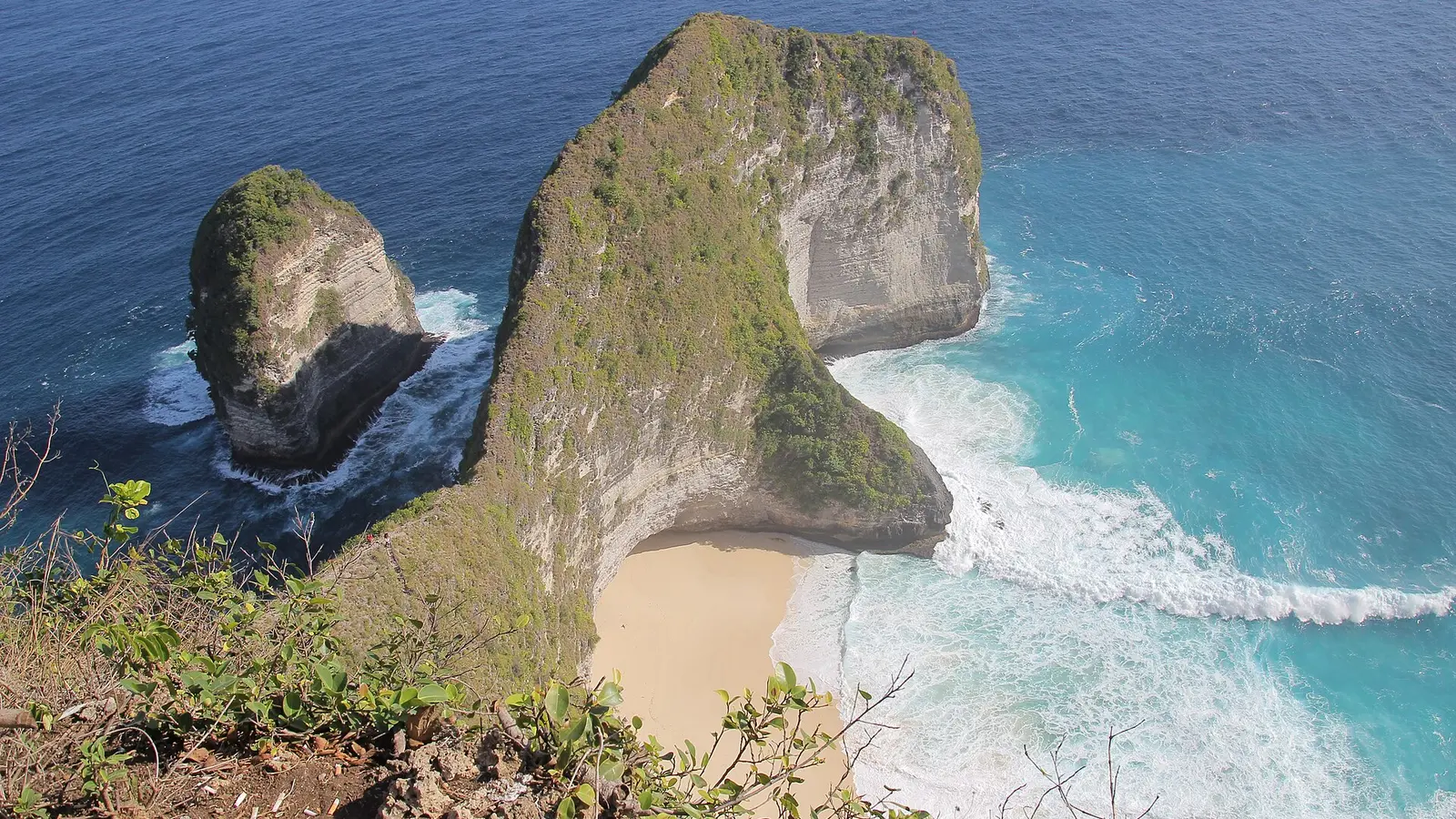
The choice most people get backwards
People frame this as a price fight. It isn't. In 2026 a budget day runs roughly the same on both: around $25 to $40 in Bali, around $30 to $50 across most of Thailand, per Budget Your Trip and current guesthouse rates. The real split is scale and shape. Bali is one island you can drive across in a few hours. Thailand is a country with a big capital, a mountainous north, and two separate coasts of islands running opposite seasons. Pick on cost and you'll miss the point. Pick on what you actually want to do all day and the answer usually falls out fast.
The other thing that changed in 2026 is the paperwork. Thailand moved to cut its long visa-free stay, and both countries now run mandatory digital entry steps. None of it is hard, but it reshapes a long trip, so it belongs at the top of the decision, not buried in a footnote. We cover the exact numbers below and flag what to confirm before you commit.
Costs are close, so decide on fit. Bali rewards a base-and-stay trip: surf, yoga, cafes, remote work, one island done properly. Thailand rewards movement: temples and street food in the north, island-hopping in the south, more range for the same money. If you want one place to settle, Bali; if you want variety in a single trip, Thailand. Fit is the question our editors field more than any other on this pairing, and the honest answer almost always lands on that one word.
The case for Bali
Bali is a place you sink into, not one you tick off. It is small, and that smallness is the point: a villa in Canggu or Ubud, a scooter, and a two-week rhythm of surf at dawn, work or a temple in the middle of the day, and warungs at night. The Hindu culture is woven through daily life in a way the rest of Muslim-majority Indonesia isn't, with offerings on every doorstep and ceremonies you'll stumble into by accident.
For surfers and remote workers it is close to purpose-built. The west-coast reef breaks, Uluwatu, Padang Padang, Bingin, fire through the dry season, with the biggest swells around July at roughly four to ten feet, per Bali surf-camp season guides. The cafe-and-coworking scene in Canggu and Ubud is the densest in Southeast Asia, which is why it draws long-stay digital nomads who'd find Thailand's equivalent more scattered. If your trip is really one long base with day trips off it, Bali is built for that.
The costs have crept up, and honesty matters here. This is not the $15-a-day island of a decade ago. Reckon on around $70 to $150 a day once you factor south-coast villa rates, and every visitor pays a one-time levy of IDR 150,000, roughly $10, on entry, confirmed on the official Love Bali levy portal. Ubud and the east stay cheaper than Seminyak and Canggu. Still, for what you get, a warm-water reef break and a villa with a pool, it lands on plenty of shortlists, including our best beach destinations roundup.
- One compact base: surf, cafes, yoga and villas within a short scooter ride
- World-class reef surf on the west coast through the April to October dry season
- The deepest digital-nomad and coworking scene in the region, centred on Canggu and Ubud
- Living Hindu culture and daily ceremony you won't find elsewhere in Indonesia
- Warm water and pool villas that punch above the nightly price
- South-coast traffic is genuinely bad; short distances eat long hours
- Prices have risen; the hotspots feel more premium than the backpacker myth
- It's one island, so variety runs out faster than in Thailand
- Overtourism is real in Canggu, Seminyak and Uluwatu at peak
Bali isn't a country you tour, it's an island you move into for a while. Judge it on the rhythm of a day, not a checklist.
The case for Thailand
Thailand's advantage is simple: it's a whole country, so a single trip can hold three or four completely different ones. Bangkok for the food and the chaos, Chiang Mai and Pai for cool mountains, temples and cheaper months, then a flight south to the islands. The transport backbone, sleeper trains, cheap domestic flights, endless buses and ferries, is far better developed than anything Bali needs, because Bali is small enough not to. That range is why it anchors so many first Southeast Asia trips and shows up across our best solo-travel destinations list.
It also stretches a budget further across more of the map. Budget travelers manage a solid day on around $30, with mid-range comfort near $60 to $100, per 2026 Budget Your Trip and hostel data, and the north (Pai, Chiang Rai) runs roughly half the price of the marquee islands. Phuket, Koh Phi Phi and Koh Samui cost 25% to 50% more than the mainland, so where you go inside Thailand swings the number more than the country-to-country gap does. For the full breakdown by region, our Thailand travel guide goes deeper, and it lands high on our cheapest-countries ranking.
The catch is the two-coast puzzle. The Andaman side (Phuket, Krabi, Phi Phi) and the Gulf side (Koh Samui, Koh Phangan, Koh Tao) run their dry seasons months apart, so the right island depends entirely on your dates. Get that wrong and you land in a downpour while the other coast bakes in sun. Bali has no such trap: one dry season, one island. Thailand gives you more, but asks you to plan the calendar more carefully, which is exactly the kind of timing our seasonal planner is built to sort.
- A whole country in one trip: capital, mountainous north, and two island coasts
- Excellent, cheap transport, sleeper trains, domestic flights, buses and ferries
- Street food that's a destination in itself, and among the best value anywhere
- The northern towns run roughly half the price of the headline islands
- Easy to combine with Vietnam, Laos or Cambodia on a longer route
- The two coasts run opposite dry seasons, so island choice is date-dependent
- Marquee islands (Phuket, Phi Phi, Samui) are crowded and pricier than the mainland
- Full-moon-party circuits and go-go strips aren't everyone's scene
- The 2026 cut to visa-free length shortens easy long stays; see below
Bali vs Thailand, head to head
Six things people actually choose on, scored side by side. "Winner" is a lean, not a knockout; on most rows the gap is smaller than the internet pretends.
| What you're weighing | Bali | Thailand | Leans |
|---|---|---|---|
| Daily cost | ~$25–40 budget, ~$70–150 mid-range | ~$30 budget, ~$60–100 mid-range | Thailand (mid-range) |
| Beaches & surf | World-class west-coast reef surf; fewer soft-sand swimming beaches | Postcard islands and calm swimming bays; surf is seasonal and secondary | Split: surf Bali, swim Thailand |
| Culture | Living Hindu island culture, dense and everyday | Buddhist temples, northern hill country, huge range | Split: intensity vs breadth |
| Nightlife | Beach clubs and Canggu bars, one concentrated scene | Bangkok, full-moon parties, island bars, far more variety | Thailand |
| Ease & logistics | Small island, scooter-based, but brutal south-coast traffic | Cheap flights, trains and ferries link a whole country | Thailand (for range) |
| Dry season | Apr–Oct, one clean window island-wide | Andaman Nov–Apr; Gulf drier Jan–Apr; opposite coasts differ | Bali (simpler to time) |
Read the table as a pattern, not a scoreboard. Thailand edges the value and variety rows; Bali edges the surf and the simplicity of a single season. Nobody wins all six, which is the honest reason both keep topping Southeast Asia shortlists year after year.
The verdict
After weighing cost, beaches, culture, nightlife, logistics and season, the split comes down to how you want your days to feel, not which country is objectively better. Bali is for settling in: you surf, or want to learn on a reef, and you'd rather have one base with a pool than a suitcase that never unpacks, you're working remotely and want cafes and coworking within a scooter ride, and you value a single, easy-to-time dry season from April to October with daily Hindu culture as a draw in itself. If your ideal trip is two to four weeks of rhythm in one place, Bali is the better buy even at the higher mid-range rates. Thailand is for range in one trip: you'd rather see a capital, mountains and islands than perfect one island, you like moving by cheap train and ferry, you're chasing the best value across a longer route, maybe rolling into Vietnam or Cambodia after, and you want calm swimming beaches and street food over reef surf. First-timers to Southeast Asia usually get more out of Thailand precisely because it's several trips in one, which is why it headlines our country guide.
They're a short, cheap flight apart, and they solve different problems. A common 2026 route is a couple of weeks moving through Thailand, then a flight to Bali to slow down and surf before flying home. Time it to the overlap, roughly April to October, when Bali is dry and Thailand's Andaman coast still has decent stretches, and one trip gets you both.
Frequently asked questions
They're close on a backpacker budget, around $25 to $40 a day in Bali and roughly $30 a day across much of Thailand, per 2026 Budget Your Trip and hostel data. Thailand tends to win at the mid-range because its northern towns (Pai, Chiang Rai) run about half the price of the marquee islands, while Bali's south-coast villa rates have climbed toward $70 to $150 a day. Where you go inside each place swings the number more than the country-to-country gap: Ubud is cheaper than Canggu, and Chiang Mai is far cheaper than Phuket.
It depends what you mean by better. Bali wins for surf: its west-coast reef breaks like Uluwatu and Padang Padang are world-class through the April to October dry season, with the biggest swells around July. Thailand wins for swimming and postcard scenery: the Andaman and Gulf islands have calmer, softer-sand bays that suit families and casual swimmers better. Bali has fewer easy swimming beaches; Thailand's surf is seasonal and secondary. Surfers lean Bali, beach-loungers lean Thailand.
Both give most US, UK, Canadian and Australian visitors 30 days. Bali issues a 30-day visa on arrival for around $35, extendable once to a 60-day total, and Indonesia processes it through its official e-VOA portal. Thailand cut its longer visa-free stay to 30 days under a framework its Cabinet approved in May 2026, with a one-time extension around THB 1,900, and it also requires the free Thailand Digital Arrival Card within 72 hours of arrival. Rules moved in 2026, so verify your exact allowance on each government's immigration site before booking a long trip.
Bali has one clean dry season, roughly April to October, which is also its surf season, so it's simple to time. Thailand is trickier because its two coasts run opposite seasons: the Andaman side (Phuket, Krabi, Phi Phi) is driest from November to April, while the Gulf islands (Koh Samui, Koh Phangan, Koh Tao) are best from roughly January to April and stay wetter late in the year. If you want to combine both countries, April to October is the overlap where Bali is dry and parts of Thailand still work.
For most first-timers, Thailand, because it's several trips in one: a big capital, a mountainous north, and two coasts of islands, all linked by cheap, well-run trains, flights and ferries. That range makes it forgiving if your plans change and easy to extend into Vietnam, Laos or Cambodia. Bali is the better first trip if you already know you want to settle in one place to surf, work remotely or do yoga rather than move around. Thailand for breadth; Bali for depth.
Costs are close enough to ignore, so choose on shape: Bali to settle and surf in one easy-to-time season, Thailand to roam a whole country for the same money. Can't pick? They're a cheap flight apart, so run Thailand first, then slow down in Bali, and let the April-to-October overlap make it one trip.