


The dilemma nobody wants to settle
You have roughly ten days and a choice between two countries that both feel like the whole point of European travel. Pick Italy and you are trading islands for cathedrals of food and art, cities stacked so densely with history that you trip over a Roman column on the way to lunch. Pick Greece and you are trading that density for light, sea, and space, whitewashed villages that spill down cliffs and a coastline that seems to go on until the map runs out. Neither choice is wrong, which is exactly why it is so hard to make.
The mistake most people make is treating this as a beauty contest, and it is not, because both would win. The useful question is narrower: which country matches the trip you actually want to take, at the budget you have, in the weeks you can travel? Answer that honestly and the winner tends to name itself. What follows lays out where each one truly pulls ahead, the numbers behind a real day on the ground, and the crowd rules that have quietly changed the calculation for 2026. It is the same way our team would talk a friend through the choice, honestly, and without pretending there is one winner.
Choose Italy for food, art, and city-to-city variety on a first big European trip, and expect to pay for the privilege. Choose Greece for islands, sea, and a slower, cheaper rhythm, especially on a second Mediterranean visit or a longer, more relaxed one. If you cannot decide, your travel dates and your daily budget usually break the tie before your heart does. Line the two up in our seasonal guide before you commit.
Where Italy makes its case
Italy wins on depth. In the span of a single week you can stand under Michelangelo's ceiling in Rome, eat handmade tagliatelle in Bologna, drift past Venice's palazzi, and watch the light change over the Florentine hills, and each of those places would justify the flight on its own. The country rewards the traveler who likes to move, because the trains are fast, the distances are short, and every city delivers a different accent, a different pasta shape, a different chapter of the same long story. If you love art, cathedrals, and the sense that you are walking through the source material of Western culture, nothing on the Greek mainland matches Italy's sheer concentration of it.
Food is the other pillar, and it is the one that turns first-timers into returners. Italian cooking is fiercely regional, so a pizza in Naples, a ragù in Bologna, and a plate of cacio e pepe in Rome are almost three different cuisines wearing the same flag. The everyday value is real too: a plate of pasta in a neighborhood trattoria still runs somewhere around 10 to 15 US dollars per Budget Your Trip's 2026 comparison, which is remarkable for the quality you get. Where Italy stings is the marquee experiences, the timed Colosseum slot, the gondola, the Uffizi queue, and the peak-season hotel rates in Venice and the Amalfi Coast, which is why the country reads as more expensive overall even when the food does not. For the full run of cities and regions, our Italy travel guide maps where the value hides.
Where Greece answers back
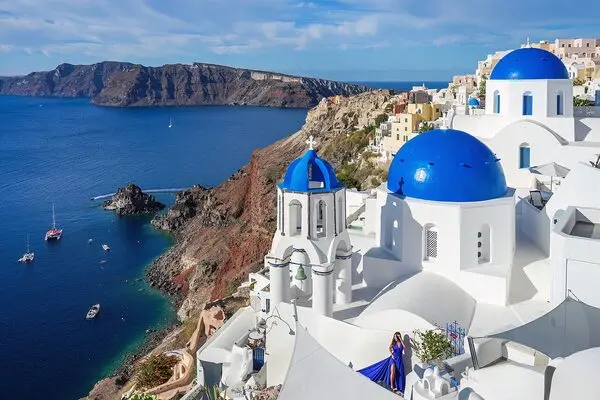
Greece wins on air. There is a particular feeling to a Greek island evening, the heat easing, the sea gone violet, a plate of grilled fish and a carafe of house wine on a table two steps from the water, that Italy, for all its glory, rarely delivers with the same ease. This is a country built for slowing down. You base yourself on one island or two, you swim, you eat late, you take the ferry when you feel like it, and the days blur pleasantly together. If your idea of a great trip is a lounger, a coastline, and very little agenda, Greece is not just competitive here, it is in a different sport.
History runs just as deep, it simply arrives more thinly spread. The Acropolis, Delphi, Knossos, and Olympia are as old and as consequential as anything in Rome, but you visit them across a mountainous mainland rather than tripping over them between coffees, so Greece asks for a little more planning to see the ruins and rewards you with far more room around them. The trade for that spaciousness is logistics: ferries between islands eat time and can be knocked out by summer wind, and hopping three islands in a week often costs more in transit than it saves in charm. Anchor your route, resist the urge to collect islands, and read our Greece travel guide to pick the group that fits your pace.
The two of them, side by side
Here is the head-to-head on the six things that actually decide this trip. Read it as a set of trade-offs rather than a scoreboard, since the row that matters most to you outweighs the other five.
| What you care about | Italy | Greece |
|---|---|---|
| Food | Regional and endlessly varied; a trattoria pasta runs roughly $10–15 | Fresh, simple, sea-facing; a full taverna meal runs roughly $15–20 |
| Ruins & history | Dense and unavoidable; Rome, Pompeii, and Florence in one loop | Ancient and spread out; Acropolis, Delphi, and Knossos across the mainland and Crete |
| Islands vs cities | Art cities and quick trains; the coast is a supporting act | Islands are the main event; cities are a day or two of Athens up front |
| Daily cost (mid-range) | Around $150–170 per person per day, higher in Venice and Amalfi | Around $90–140 per person per day, spiking on Santorini and Mykonos |
| Best season | April to June and September, when heat and crowds ease | Late May to June and September, warm sea without the August crush |
| Crowds & new caps | Venice access fee and timed tickets at major sites in 2026 | Cruise-passenger caps and a peak-island levy from 2025 onward |
Italy is a country you move through; Greece is a country you settle into. Match the verb to the vacation you actually want.
What a real day costs
On paper Greece is the cheaper country, and for most trips it stays that way, but the gap is narrower than the reputation suggests and it can flip entirely on the wrong island. A mid-range day in Italy lands somewhere around 150 to 170 US dollars per person once you fold in a comfortable hotel, sit-down meals, sights, and trains, per Budget Your Trip's 2026 figures. Greece typically runs lower, roughly 90 to 140 US dollars a day on the mainland and mellower islands, with food and local transport noticeably cheaper. The catch is the postcard islands: a summer stay on Santorini or Mykonos can push a day past 250 dollars and rival anything Venice charges, so Greece is only reliably the budget pick if you steer away from the two most photographed rocks in the Aegean.
Expect roughly $150–170 a day in Italy and $90–140 a day in Greece for a comfortable mid-range trip, with both figures collapsing in shoulder season and both exploding on the marquee islands and canal cities. Greece is the cheaper base for a slow, sea-first trip; Italy justifies its premium if variety and art are what you came for. Build either one out properly with our trip-budget guide.
Timing, and the crowd math
Both countries share the same golden windows and the same August mistake. Aim for roughly late April to June or September and you get warm days, a sea that is swimmable by early summer and still warm by autumn, and prices well off the July and August peak. Midsummer is when both turn punishing: the heat climbs, the queues harden, and the Mediterranean light you came for arrives with a wall of other people standing in it. If your dates are fixed, our month-by-month breakdown shows which weeks reward a Mediterranean trip and which ones to skip.
What is genuinely new for 2026 is how hard both countries are pushing back on crowds, and it changes the on-the-ground experience. Greece drew record numbers in 2025, with the national statistics agency reporting around 38 million international visitors and roughly 22 billion euros in tourism revenue, and it has responded with a hard cruise-passenger cap on Santorini and a peak-season levy on its most crowded islands, per the Greek tourism board. Italy has moved the same direction, expanding Venice's day-tripper access fee for 2026 and locking major Roman and Florentine sites behind timed reservations, per Italy's official tourism site. The practical upshot: book headline sights and island ferries earlier than you used to, and treat a walk-up ticket to anything famous as wishful thinking.
Booking the right one
Stop trying to crown the better country, because that contest ends in a draw every time. The question worth answering is which one suits the trip in front of you. Choose Italy if this is your first real swing at Europe, or you want maximum variety, world-class art, and a plate of pasta that reorders your priorities, and accept that you will pay a little more for the density. Choose Greece if you have done the cathedral circuit, or you want a slower, warmer, cheaper trip where the plan is mostly sea and the occasional ancient wonder, and let the ferries set the pace. On a longer trip, or a return visit, that second description is the one most people find themselves quietly wanting.
Italy is the richer, busier, pricier trip; Greece is the calmer, cheaper, more open one. First big European adventure and a hunger for art and food, Italy. A relaxed, sea-first escape or a second lap of the Mediterranean, Greece. When the two stay level, whichever country's best month matches your leave is the one to book, and you can always give the loser next summer. See where each ranks in our 2026 destinations roundup.
Frequently asked questions
Greece is usually the cheaper country. Plan on roughly $90–140 per person a day in Greece across the mainland and quieter islands, versus around $150–170 in Italy, per Budget Your Trip's 2026 figures, with food and local transport noticeably cheaper in Greece. The exception is the famous islands: a summer stay on Santorini or Mykonos can push past $250 a day and match anything Venice or the Amalfi Coast charges. So Greece is reliably cheaper only if you avoid the two or three most photographed islands.
For a first big European trip, most travelers get more from Italy. It packs world-class art, deep history, and endlessly varied regional food into short, train-connected distances, so you see and taste an enormous amount in a week or ten days. Greece tends to reward a second Mediterranean visit or a longer, slower trip, when you would rather settle into island life than sprint between museums. If you love beaches and downtime over cathedrals and cities, though, flip that and start with Greece.
Italy has the more varied and celebrated cuisine, so on range and reputation it takes this one. Its cooking is intensely regional, meaning Naples, Bologna, and Rome each feel like a separate food country, and a trattoria pasta still runs around $10–15. Greek food is simpler and built around fresh seafood, grilled meats, olive oil, and mezze, at its best on a taverna table by the water, with a full meal around $15–20. Italy wins on variety; Greece wins on that specific pleasure of eating fresh fish two steps from the sea.
Both countries peak in the shoulder months of roughly late April to June and September: warm days, a swimmable sea, and prices and crowds well below the July–August high. Midsummer brings heat, queues, and top rates to both. September is a standout for Greece, since the Aegean stays warm into autumn, while spring suits Italy's cities before the heat sets in. Whichever you pick, book headline sights and island ferries early in 2026, because new crowd caps and timed-entry systems have made walk-up access unreliable.
It can be, but only with enough time. The two are close and well connected by short flights and seasonal ferries, so a two-to-three week trip pairing a slice of Italy with a Greek island or two works nicely. Anything shorter, and you spend the saving in transit and arrive home having rushed both. If you have ten days or fewer, pick one country and go deep rather than skimming two. For a longer trip, front-load Italy's cities while your energy is high, then decompress on the Greek coast at the end.