


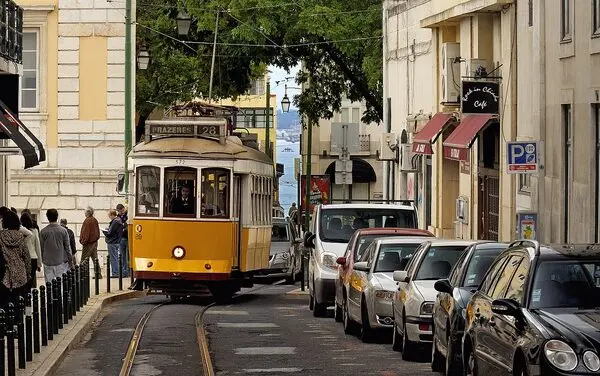
There is a particular kind of afternoon that Portugal gives you almost for free. Tiled staircases climb through the heat, trams pass within inches of the shoulder, and streets open onto viewpoints where the light turns everything gold and fado drifts out of an open window somewhere nearby. A coffee still costs less than a euro, so few people are in a hurry to move on. That texture, the closeness of things and the slowness of the day, is the reason Portugal keeps landing near the top of Europe's most-loved lists, and it costs noticeably less than France, Italy, or Spain to experience. The RealRoute desk keeps handing this one to first-timers who want Western Europe without the Western-European bill.
This guide is built for a first real trip in 2026: how the three core regions actually feel and which one suits you, the months when the weather and the prices align, what a day costs at a backpacker and a mid-range pace, a first week that leaves room to breathe, and the practical business of getting around by train. Portugal is also, by the numbers, one of the safest countries in the world, which changes how much of it you can see on your own terms. We'll come back to that.
The regions, and which fits you
Portugal is small enough that you can touch all three of its signature regions in a fortnight, but each asks for a different pace, and choosing wrong is the quickest way to feel like you rushed. Read these less as a checklist and more as three moods, and pick the one that matches the trip you actually want.
Lisbon: the hills, the light, the noise
Lisbon is the city most people mean when they say they want to go to Portugal, and for good reason. You spend your days climbing between neighborhoods that each feel like their own village, Alfama's tangle of stairways and laundry lines, the grand grid of Baixa below, the bars and viewpoints of Bairro Alto that only really wake up after dark. The famous 28 tram is charming and also pickpocket territory when it's packed, so keep your bag in front of you and treat it as transport rather than a highlight. What stays with you is the feeling of a capital that never quite lost its human scale, where you can walk almost everywhere and the river is always somewhere below you. If you're weighing it against its neighbor, our Portugal vs Spain comparison is the honest side-by-side. One caveat worth naming early: Lisbon in peak summer is hot, loud, and increasingly crowded, and the charm thins when you're queuing in it.
Porto & the Douro: slower, softer, and about the wine
Porto asks less of your legs and gives back a gentler kind of day. You wander down through the Ribeira's stacked houses to the river, cross the iron bridge, and spend an afternoon tasting port in the cellars of Vila Nova de Gaia while the light does something quiet and lovely over the water. It's cheaper than Lisbon for a room and a meal, which is worth knowing if your budget is finite. Give yourself at least one day beyond the city and take the valley train up the Douro, where the vineyards fold down to the river in terraces that have been cut by hand for centuries; it is one of the most beautiful rail journeys in Europe and you barely have to plan it. Porto rewards the traveler who isn't in a hurry, though if you need constant motion and nightlife, you may find its rhythm a touch too calm.
The Algarve: the coast, at two very different speeds
The Algarve is where Portugal keeps its postcards: ochre cliffs, sea caves you reach by kayak, and beaches tucked into coves you have to earn on foot. It runs at two speeds, and the gap between them matters. The central strip around Albufeira and Lagos is developed, busy, and built for high-season sun holidays; the western and eastern edges, out toward Sagres or over toward Tavira, stay wilder and quieter, and that is where the region's real magic hides. If a coastline is the point of your trip, weigh it against the wider field in our best beach destinations for 2026. As a solo traveler you'll find the towns easy and warm, but the beaches themselves can empty out fast at the ends of the day, so time your walks back before the light goes.
Three very different trips sit within a couple of hours of each other here: a hill city that never sleeps, a river town that never rushes, and a coast that hides its best beaches from anyone unwilling to walk.
The right months
The sweet spots are late spring and early autumn, roughly May–June and September–October, when the days are warm and long, the sea is swimmable, and you're not paying August rates or sharing the viewpoints with everyone else. September is the quiet star of the year: the Atlantic has had all summer to warm up, the Algarve crowds have thinned, and the Douro slides toward harvest. July and August bring the hottest, priciest, most crowded weeks, gorgeous if beach heat is exactly what you came for, wearing if it isn't. Winter is mild, green, and genuinely cheap, with short days and a real chance of rain, which suits a slow city trip to Lisbon or Porto more than a coastal one. If you're still weighing dates, our best time to visit guide sets Portugal's shoulder-season windows against how the rest of the continent's calendar behaves. Whatever you choose, book a few weeks either side of the school holidays and you'll feel the difference in both price and peace.
The money
Portugal's great gift to a traveler is that comfort here is affordable in a way it no longer is across much of Western Europe. Backpacking, with a hostel dorm, the menu do dia at lunch, public transport, and a couple of paid sights, you can move on roughly €55–75 a day, per Budget Your Trip and Numbeo figures. Step up to a private room, dinners out, and the occasional taxi and a mid-range day sits closer to €110–180. The details make it real: a dorm bed runs around €20–40 depending on season, and that midday menu do dia, a starter, a main, a drink, sometimes dessert, lands at roughly €12–18 in a local spot. Porto and smaller towns like Braga, Aveiro, and Nazaré come in below Lisbon on both rooms and food, so front-loading your budget-conscious days there is an easy win. If value is your organizing principle, see where Portugal lands in our cheapest countries for 2026.
A first week
This is a seven-day route that trusts you to linger, moving south to north and ending on the river in Porto. It's deliberately unhurried, three bases rather than five, so you spend your time in places rather than in transit. Treat it as a spine you can hang your own days on, not a schedule to obey.
- Days 1–3, Lisbon: one day on foot through Alfama, Baixa, and Chiado; one for the tram to Belém and its pastéis de nata and river monuments; one for a slow morning at a viewpoint and an afternoon day trip out to the palaces of Sintra, going early to beat the queues.
- Day 4, the Algarve: take the morning train south to Lagos or Tavira, drop your bag, and spend the afternoon walking the cliff paths above the coves while the light is still high.
- Day 5, the coast at its own pace: a boat or kayak out to the sea caves in the cooler morning, a long lunch, and a quiet beach in the afternoon; start your walk back while the sun is still high.
- Day 6, north to Porto: a travel day by train up the length of the country; arrive in time to watch the sun set over the Douro from the Gaia side with a glass of port in hand.
- Day 7, Porto and the valley: the Ribeira and a cellar tasting in the morning, or the scenic valley train deeper into the Douro if you can spare the daylight, a fitting last picture of the trip.
Trains and transfers
You don't need a car for this trip, and skipping the rental spares you both cost and the stress of parking in medieval streets. The spine of the country is the train, run by CP, Comboios de Portugal, and the flagship Alfa Pendular links Lisbon and Porto in about 2 hours 35 minutes at up to 220 km/h, with free Wi-Fi and power at every seat. A one-way ticket in tourist class runs around €36 in 2026, after a small January fare rise, and tickets open about 60 days ahead, with early-booking promo fares that can cut the price by more than half. Book those a few weeks out and the train becomes cheaper than driving as well as easier. For the coast and the smaller towns, regional trains and intercity buses fill the gaps, and Rome2Rio is the fastest way to see every option, train, bus, and drive time, for any two points at a glance. Within Lisbon and Porto, walk, ride the metro, and use the historic trams as transport rather than sightseeing, with your valuables in front of you on the busy ones.
Frequently asked questions
Generally, yes. Portugal runs noticeably cheaper than France or Italy on rooms, meals, and transport, and it typically edges below Spain too, especially outside Lisbon. A backpacker day sits around €55–75 and a mid-range day around €110–180, with Porto and smaller towns like Braga and Aveiro coming in below the capital. The everyday details make it tangible: a hostel dorm runs roughly €20–40 and a set-lunch menu do dia about €12–18. For the direct match-up, our Portugal vs Spain guide weighs the two side by side.
Not for a trip taken in most of 2026. Portugal is in the Schengen Area, and the EU's ETIAS travel authorization is expected to start around the last quarter of 2026, followed by a transition period during which it is not yet mandatory, with full enforcement anticipated in 2027. Visa-exempt visitors from the US, UK, Canada, Australia, and elsewhere can still enter with just a passport until then, and the fee is expected to be around €20 once live. Because the exact date and rules can still move, it's worth a quick look at the official ETIAS portal to see where things stand when you're actually booking, plus your nationality's rules in our visa requirements guide.
It's one of the safest countries you can travel in. Portugal placed 7th in the 2025 Global Peace Index, and 5th in Europe, with low violent crime and strong political stability, which makes it an unusually easy place to explore alone, including for women. The real risk you'll meet is petty theft: pickpocketing on the crowded 28 tram in Lisbon, on packed metros, and in tourist crushes. Keep your bag in front of you, don't leave a phone on a café table, and you remove most of the problem. The one habit worth keeping is the ordinary solo one, timing your walks back from quiet beaches and empty viewpoints before dusk settles in.
The train, comfortably. CP's Alfa Pendular covers Lisbon to Porto in about 2 hours 35 minutes at up to 220 km/h, with Wi-Fi and power at every seat, for around €35.70 one-way in tourist class in 2026. Tickets open roughly 60 days ahead, and early-booking promo fares can cut that by more than half, so it's worth booking a few weeks out rather than at the station. It's faster and less stressful than driving, and cheaper too once you factor in fuel, tolls, and parking. Buses are a slower budget backup; use Rome2Rio to compare the options for any route.
Pick the mood first, then the map. Choose Lisbon for a hill city with the volume up, Porto and the Douro for river light and slow afternoons, the Algarve's wild edges if the coast is the point. Aim for May–June or September, hold a rough €55–110 a day depending on your pace, and let CP's trains carry you between them. Portugal makes it unusually easy to travel well on less, and safely on your own, so the only real decision left is which of its three trips to take first.